
Eloping to Glencoe: a practical guide to Scotland's most dramatic elopement location
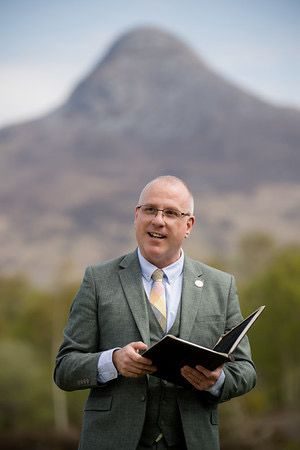
Of everything couples type into a search bar while planning a wedding, "Glencoe elopement" is one of the most specific I see — and it's usually Americans typing it. Not "Glencoe wedding venue," not "wedding in the Highlands." Specifically Glencoe, specifically elopement. I think that's because most people have already seen this glen before they've ever set foot in Scotland — it turns up behind opening credits, on calendars, in the background of half the "most beautiful place in Scotland" lists on the internet — and something about it says, correctly, that this is a place worth flying across an ocean for two people and a ceremony. This guide is the practical version of that instinct: the real spots, the legal groundwork, what it costs, and how to actually pull it off.
The spots that make Glencoe worth the trip
Glencoe isn't one location, it's a glen with several genuinely distinct backdrops within a few miles of each other, which is part of why it works so well for an elopement — you can move between two or three settings in a single morning without much driving at all.
Start with Buachaille Etive Mòr, the pyramid-shaped mountain that sits at the eastern entrance to Glen Etive, right where it meets the main road through Glencoe. It's widely described as the most photographed mountain in Scotland, and once you've stood in front of it, that claim stops sounding like marketing. It has a presence that a lot of mountains simply don't — a clean, dramatic shape that reads in a photograph exactly the way it feels standing there. For couples who want one unmistakably iconic shot from the day, this is usually it.
For the glen itself, the classic view is from the roadside pull-in commonly known as The Study, looking across at the Three Sisters of Glencoe — three great ridges of Bidean nam Bian dropping straight down into the valley. This is one of the most useful facts for elopement planning specifically: it's a real, accessible viewpoint right off the road, not a summit you need half a day and a head for heights to reach. A small ceremony here, with the Three Sisters as the backdrop, is entirely realistic on foot in normal shoes.
Glen Etive — the single-track road that peels off the A82 and follows the River Etive down toward the loch — is worth the detour too, both for its own quieter, more private character and for the fact that it's a real Skyfall filming location, along with a general Highlands screen-tourism pull that Outlander has only added to over the years. I wouldn't build a whole ceremony around the film connection, but it's a nice thing to know as you're standing there, and it does genuinely explain part of why the road gets busier every summer.
None of this is a secret, by the way — there's a real, working elopement photography and planning industry already active around Glencoe, because enough couples have had exactly this idea before you. That's worth knowing both as reassurance (you're not inventing something odd) and as a nudge to book early, since good photographers and quiet weekday slots do get taken.
Do you need a venue? Is this even legal?
This is usually the first practical question once the visual decision is made, and the answer tends to surprise people: no, you don't need a venue at all. A legally binding humanist ceremony in Scotland can take place anywhere you can stand — a roadside viewpoint like The Study, a hillside, a riverbank in Glen Etive, the edge of a car park with a view that happens to be one of the best in the country. There's no requirement for a building, a licensed room, or a registered venue of any kind. What makes the marriage legal is that it's conducted by a celebrant authorised for that purpose — for humanist weddings, that's Humanist Society Scotland — and that the correct paperwork has been submitted and signed. The location itself can be, quite literally, wherever you two choose to stand.
The practical constraints are weather and access rather than law: Glencoe's weather changes quickly and the road can be exposed, so it's worth having a shorter, more sheltered backup spot in mind and a flexible attitude about which viewpoint you actually use on the day.
The legal side for American couples, honestly
If you're planning this from the US, the two questions I get asked most are whether the marriage will actually count back home, and whether you need a special visa. Both have real answers, so here they are plainly.
On recognition: a marriage that is validly performed in the place where it takes place is, as a general principle, recognised as valid in the United States too — a Scottish humanist marriage is a real, legal marriage here, and that doesn't stop being true when you land back home. I'll say the obvious caveat clearly rather than skate past it: I'm a celebrant, not a lawyer, and if either of you has an unusual circumstance — a previous marriage, an immigration process under way, or anything state-specific — it's worth a quick check with your own state rather than taking a blog post's word for it. For the great majority of couples, though, this simply isn't the obstacle people worry it might be.
On visas: this is genuinely nationality-dependent, so I won't give you a blanket rule that might be wrong for you specifically — check gov.uk/marriage-visa directly. What is consistent across the board is that a Standard Visitor visa does not permit you to marry, register a civil partnership, or even give notice of marriage while you're in the UK on one. If you need a visa to enter the UK at all, and you intend to marry while you're here, you'll generally need a Marriage Visitor visa instead — a distinct visa with its own validity window and its own application process. As for the underlying marriage paperwork itself: there's no residency requirement to marry in Scotland, whatever your nationality, but you'll each still need to submit a Marriage Notice (the M10 form) to the local registrar no later than 29 days before the wedding — for couples travelling from overseas I'd aim for 10-12 weeks ahead instead, to leave breathing room. Non-UK nationals will typically also need a Certificate of No Impediment from their home country. I've written the whole process out in more depth in my guide to Scottish wedding paperwork and my guide for international couples, which covers the visa question in more detail again.
What it costs
My celebrant fee starts at £550 (2026), which includes a two-year membership of Humanist Society Scotland — the organisation through which the ceremony is legally authorised. Roughly speaking, at current exchange rates, that's somewhere in the region of $700-750, though exchange rates move around and I'd treat that as a rough guide rather than a fixed number to plan a budget against. That fee covers the meetings, the ceremony written from scratch around the two of you, guidance through the legal steps, and me showing up early with the paperwork sorted. Travel to Glencoe itself is agreed separately. I've broken the full cost picture down, including how it compares to a registrar ceremony, in my guide to humanist wedding costs in Scotland.
Practical tips for actually pulling it off
A few things worth building into your plan from the start. First, have a weather contingency — Glencoe can turn from clear to driving rain within the hour, so agree with your celebrant and photographer on a plan B spot nearby that offers a bit of shelter, and hold your timing loosely on the day itself rather than fixing it to the minute. Second, keep the guest list logistics simple: elopements here usually mean two witnesses (anyone aged 16 or over) rather than a full wedding party, which keeps parking, timing and weather management far easier along a road that has limited pull-ins. Third, think about where you'll actually stay and get ready. The Isles of Glencoe Hotel at Ballachulish, a few minutes' drive from the glen itself, is a genuinely good base — I've written more about it in my guide to the Isles of Glencoe Hotel, which also works well if you'd rather keep the ceremony itself closer to the hotel's own loch-shore setting rather than out on the road. And if Glencoe is one option among several you're weighing for an elopement anywhere in Scotland, my elopement celebrant page covers the wider picture — beaches, islands and lochsides included.
Dreaming of eloping to Glencoe? Let's talk about the practical side — the paperwork, the weather plan, and making sure the ceremony itself is as good as the view.
Check my date