
Second marriages & blended families: humanist ceremony ideas that actually fit
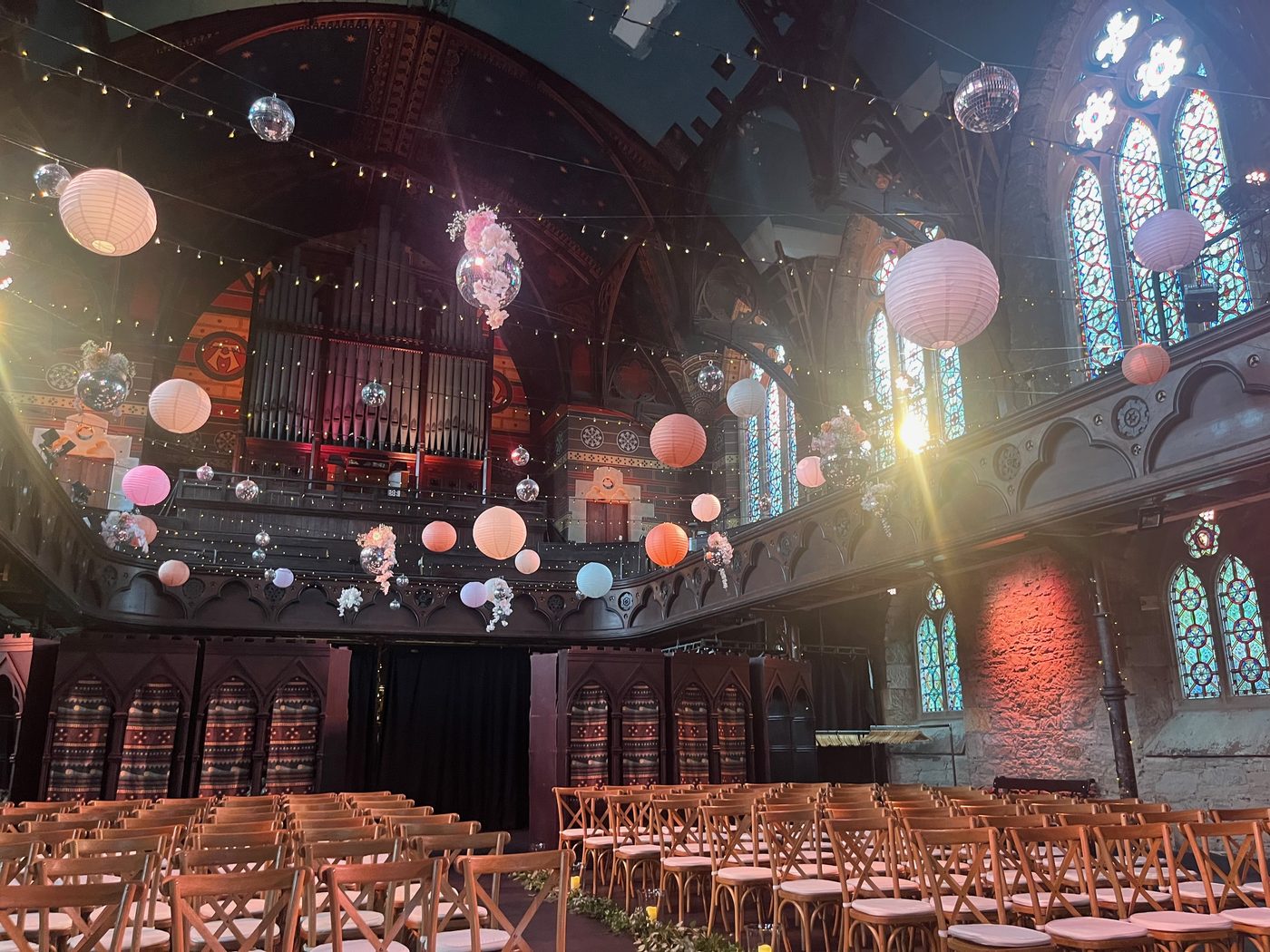
A good number of the couples I write for are not doing this for the first time. Maybe one of them was married before. Maybe both were. Maybe there are children involved — theirs, yours, the mix that gets referred to, a bit clumsily, as a "blended family" — and this wedding is as much about the shape of a new household as it is about two people. None of that needs a different kind of ceremony, exactly. It needs the same thing every couple gets from me: a script written from scratch, around your actual life, with nothing imposed that doesn't belong to you. That happens to make a from-scratch ceremony a genuinely good fit for second marriages and blended families — because there's no template being reused that assumes this is anyone's first rodeo, and no template that ignores the children in the room either.
Why a from-scratch ceremony suits a second marriage
A lot of the anxiety I hear from couples marrying again isn't really about the wedding — it's about the ceremony sounding wrong. Too fresh-faced and naïve, as if this were a first go dressed up in different words. Or too heavy, dwelling on the past when what the couple wants is simply to look forward. Both of those problems come from the same place: a script that was never written for this specific couple in the first place.
Because I write every ceremony from a real conversation with the couple in front of me, none of that guesswork is necessary. There's no assumption baked in that this is a "first" wedding, and no assumption that it has to be treated as a lesser or quieter version of one. If you want a brief, tasteful acknowledgment that this is a new chapter — a sentence or two that says, honestly, "you've both lived a life before this, and that's part of what makes this particular love story worth telling" — I can write that in with a light hand. If you'd rather the whole thing looks forward and never glances back, that's equally valid, and just as easy to write. The point is that it's your choice to make, not mine to assume.
Including children meaningfully
When a wedding is also the moment a family is taking a new shape, children are very often the thing couples most want to get right — and the thing they're most nervous about getting wrong. Here are some ways I've seen work well, none of them compulsory, all of them things a couple can pick and choose from:
A family vow or promise. Alongside the couple's own vows, I can write a short passage where the children are addressed directly by name — not as props, but as people the couple is making a genuine commitment to. Older children can be invited to make a small promise of their own back: to give the new arrangement a fair chance, to be part of the family being built. It only takes a minute or two, and it's often the part guests remember longest.
A family unity ritual. A version of a unity candle ceremony works particularly well here — the couple lighting the central flame, then each child adding their own candle or their own layer to a sand ceremony alongside them. It's a simple, visual way of showing that this new family is made up of everyone standing there, not just the two people getting married.
A role for older children or stepchildren, if they want one. A reading, acting as a ring bearer, or a stepchild walking a parent down the aisle can be a lovely way to give an older child real ownership of the day. I always ask the couple to check with the child directly rather than assume — some children would love the spotlight, and some would find it mortifying, and there's no way to know which without asking.
Never forcing it. This is the part I'd underline most. If a child is uncomfortable being named, standing up front, or taking part in any ritual at all, the ceremony can flex the other way just as easily — a quiet mention, a seat in the front row, or nothing beyond making sure they feel welcome and unpressured. A child who's had a hard time with a parent's divorce or a new partner doesn't need to be paraded in front of a room to prove the family works. Sometimes the kindest ceremony is the one that asks the least of them.
Handling family dynamics with care
Whether to acknowledge previous relationships — an ex-partner, a first marriage, the road that led here — is entirely the couple's decision, and I've written it both ways. Some couples want a quiet, dignified nod to the path that brought them to this point, particularly if children are involved and it feels honest to name that history rather than pretend it didn't happen. Others want the ceremony to stay entirely forward-looking, with no reference to what came before at all. Neither is more "correct" than the other. A good celebrant's job is to ask what you want, listen properly to the answer, and never assume — not to decide on your behalf what is or isn't appropriate to say about your own life.
Guest considerations
Blended families often come with a more complicated guest list than a first wedding does — former in-laws who are still close to the children, step-relatives, family friends attached to a previous marriage rather than this one. None of that needs to trip up the ceremony, but it does need to be understood before I write a word. Part of our conversation together is simply mapping out who's who, so the script never puts a foot wrong — no line that accidentally stings someone in the second row, no relationship glossed over or misnamed. Taking the time to understand the actual shape of your family, rather than guessing at it, is what keeps the day feeling warm instead of awkward.
A different occasion to a vow renewal
Worth being clear about one thing, because the two get mixed up: this is about a first-time legal marriage for a couple where one or both partners has been married before, or where a new family is coming together around the wedding. That's a different occasion to a vow renewal, which is for a couple already legally married to each other, reaffirming the vows they've already made — with no legal paperwork attached. If what you're actually picturing is renewing vows with your existing spouse, that guide is the better starting point. If you're planning a new legal marriage and want to bring children in properly, read on — and if you're also looking to formally welcome a stepchild into the family in their own right, a naming ceremony held separately can be a lovely way to mark that specifically, rather than folding everything into the wedding day itself.
Writing your own vows, second time around
If you're marrying again, there can be a real pull to either avoid vows that sound too much like the ones you said before, or to lean on the same phrasing because it's familiar. Neither is necessary. My guide to writing wedding vows works exactly the same whether this is your first marriage or your second — the process is about what's true of this relationship, said in your own words, and that's just as fresh a task the second time as the first.
Built from a real conversation, every time
Every ceremony I write starts the same way: we sit down, we talk properly, and the script comes out of that conversation rather than off a shelf. That matters for every couple, but it matters more here. A blended family or a second marriage has more moving parts — more people to consider, more history to handle with care, more decisions about what to say and what to leave unsaid. Getting that right isn't possible without understanding your actual family, in all its actual shape, before I write a single line.
Blending a family, marrying again, or both? I'd love to hear your story and build a ceremony that actually reflects it — no assumptions, no script off the shelf.
Check my date