
Vow renewal ceremony ideas for 2026 — how to say it all again, properly
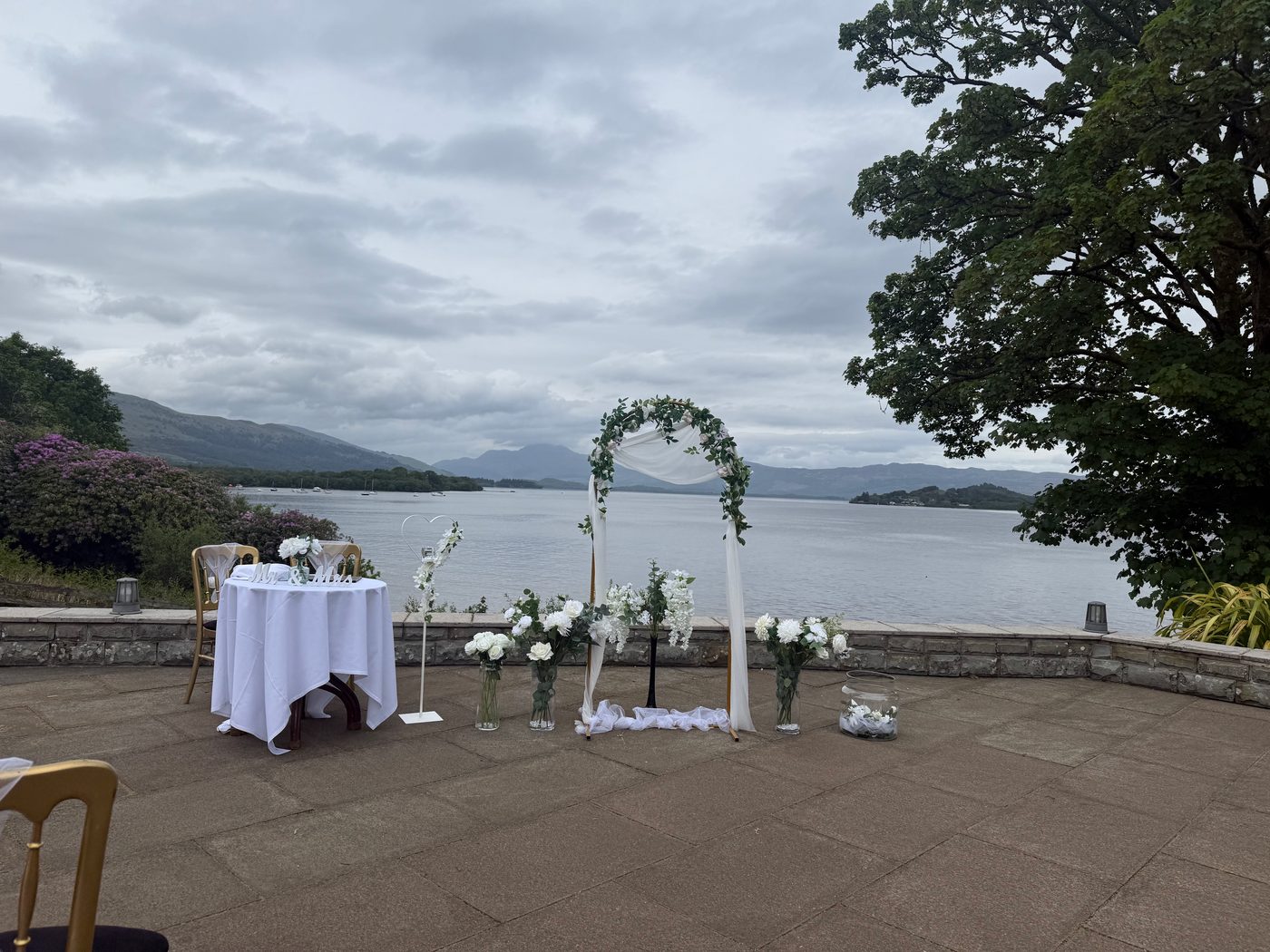
Every year I get a run of enquiries that start the same way: "This might sound strange, but we're not getting married — we already are. We want to do it again." It never sounds strange to me. A vow renewal is one of my favourite ceremonies to write, precisely because there's nothing at stake except the two of you and what you've actually lived through. If you're weighing up whether 2026 is the year to renew your vows, here's what a renewal actually involves, why couples choose it, and some ideas for making it properly yours.
What a vow renewal actually is
Here's the bit that surprises people: a vow renewal isn't a wedding, and it isn't legally binding. You're already married — so there's no marriage schedule, no notice period, no registrar, and no witnesses required to sign anything. In legal terms, nothing changes at the end of it. You walk in married and you walk out married.
That sounds like a limitation. It's the opposite. Because there's no paperwork riding on the day, there are no rules about who can conduct it, where it can happen, or what has to be said. A humanist wedding in Scotland already gives couples enormous freedom — but even that comes with a handful of legal essentials I have to include. A renewal has none of that. It's pure ceremony: whatever means something to the two of you, said out loud, in front of whoever you want there — or nobody at all but each other.
Why couples choose to renew
There's no single reason, and I've stopped expecting one. The most common is a milestone anniversary — ten years, twenty-five, fifty — where a couple wants to mark it with something more than a nice dinner. But just as often it's not about a round number at all. Couples come to me after a genuinely hard year — illness, redundancy, a bereavement, a period where the marriage itself was tested — wanting to stand up and say, in front of people who matter, that they chose to keep going. Others are marking a big birthday, a retirement, or a fresh start after a house move or a new chapter. Some eloped or married quietly the first time and want the celebration they never had. And some couples, quite simply, just fancy the party — no deeper reason required.
What all of them have in common is that they're older than they were the first time, and they know things now they didn't know then. That's the raw material a good renewal ceremony is built from.
Rewrite the vows — don't just repeat them
The single best piece of advice I can give anyone renewing their vows is this: don't read out what you said the first time. It's tempting — it feels sentimental, and it is — but a renewal written word-for-word from your wedding day tends to fall a bit flat, because it was written by two people who hadn't lived the marriage yet. The vows you'd write now, knowing what you know, are almost always better.
I encourage couples to think about what they've actually learned about each other and about staying together — not the polished, aspirational version, but the true one. What does your partner do that steadies you on a bad day? What have you forgiven, or been forgiven for? What do you understand about commitment now that you couldn't have understood as a younger couple? My guide to writing wedding vows works just as well the second time around — the process is the same, even if the material is completely different.
Ideas for personalising the day
Because there's no legal script to work around, a renewal can look like absolutely anything. Some ideas I come back to again and again with couples:
Bring the children in. If you have kids who weren't there — or weren't born yet — the first time round, a renewal is a lovely way to include them properly. They can read something, stand beside you, or make their own small promise as part of the ceremony. For some families this is the whole point of doing it: making sure the children get to see, and be part of, the thing their parents built before they arrived.
Add a ritual you didn't have first time. A lot of couples married in a register office or a hurry, long before they'd ever heard of a handfasting or a quaich. A renewal is the perfect place to add one now — shared with each other, or with everyone who's helped keep you going.
Choose a completely different setting. You don't have to go back to where you married. Some couples deliberately choose somewhere totally different — the place you got engaged, a loch shore you've walked for twenty years, a beach at the far end of the country — precisely because this chapter deserves its own backdrop rather than a rerun of the last one.
Decide how big you want it. Some renewals are enormous parties — a full band, a marquee, everyone who's ever mattered to you in one room. Others are deliberately tiny: the two of you, a celebrant, and perhaps two or three people you love, somewhere quiet. Neither is more "proper" than the other. I've written renewals both ways, and they're equally moving — scale has almost nothing to do with how much a ceremony means.
How flexible the timing can be
Because there's no legal scheduling attached, renewals are far more flexible on timing than weddings. There's no 29-day notice period, no waiting on a registrar's diary. If you want to mark an anniversary that falls in six weeks rather than eighteen months, that's very often workable. And there's no "right" length of marriage before you're allowed to renew — some couples do it at year five, some at year fifty, some more than once.
On cost — I know people want a number, and I won't invent one here. Vow renewal charges are agreed individually with each couple, much like weddings, since ceremonies vary hugely in size and shape. Get in touch and I'll come back to you with a straightforward quote.
Written from scratch, same as every ceremony
Renewals get exactly the same process as a wedding from me — we meet, we talk properly about your years together, and I write the ceremony from scratch around what you tell me. Nothing off the shelf, nothing recycled from someone else's day. If you'd like more detail on what's involved, my vow renewal celebrant page covers the full service, and the FAQ answers the other questions couples ask most often about renewals and the paperwork side of things — or rather, the happy absence of it.
Thinking about renewing your vows in 2026? Tell me a little about your years together and what you're picturing — the date, the setting, how big or small — and I'll come back with straight answers within a couple of days.
Check my date