
2026 wedding trends, through a humanist lens
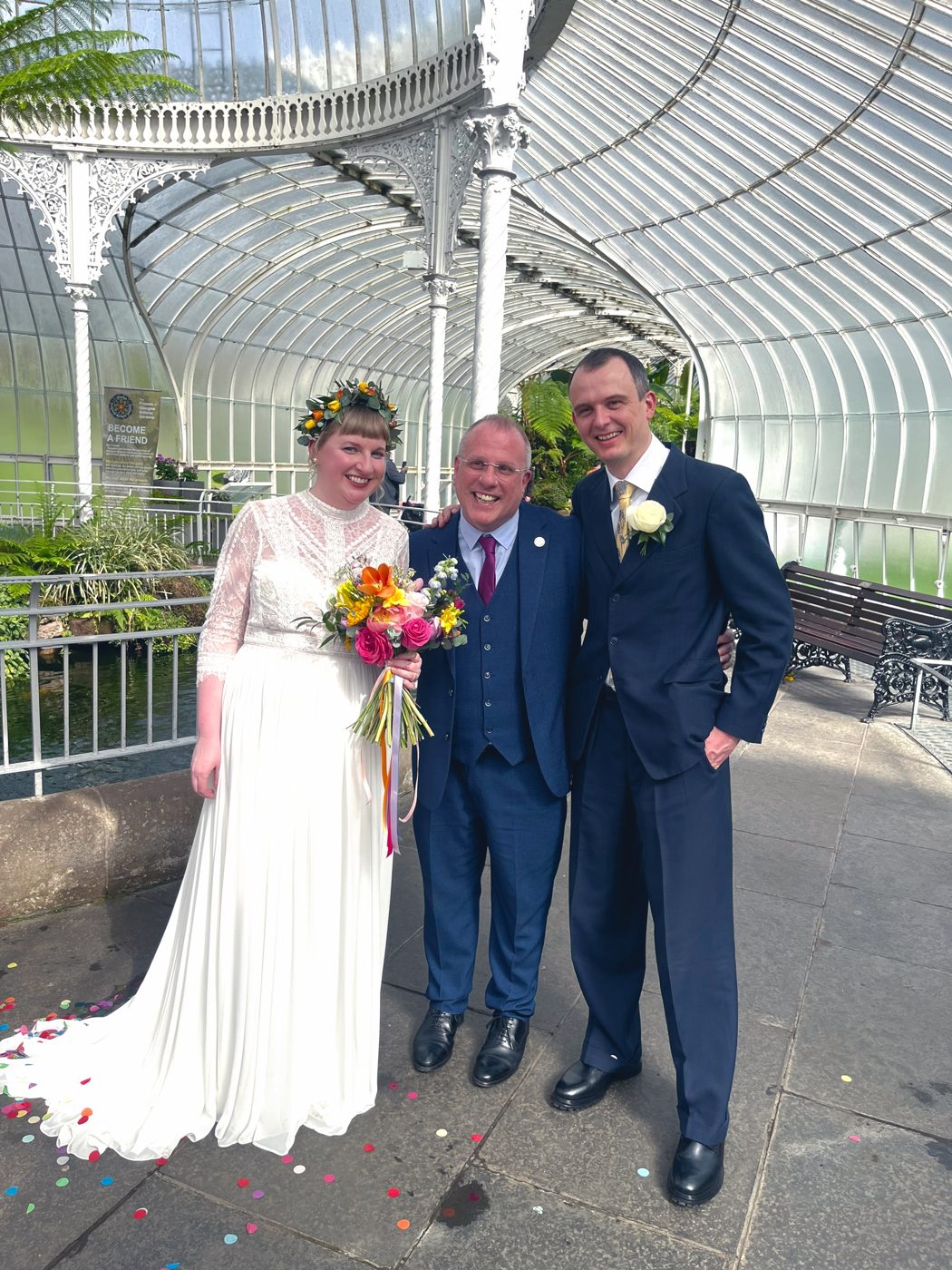
Every January there's a fresh round of "wedding trends for the year ahead" pieces, and every January I read them with the same faint sense of déjà vu. This year it's Pinterest Predicts 2026 and Bridebook's Gen Z Wedding Index doing the rounds, and between them they've landed on a fairly consistent story: couples want ceremonies that feel personal rather than generic, gatherings that are smaller and more intimate, rituals that mean something rather than ticking a box, and guests who are participants rather than an audience. Real storytelling over scripted formality. Quiet luxury over big spectacle.
I read all this the way you'd read a glowing review of a restaurant you already eat at every week. Good — glad more people are finding out. Because none of it is new to me. It's not new to any humanist celebrant. This is just what a humanist wedding is, and has been for the twenty-odd years humanist marriage has been legal in Scotland. So rather than "chasing" these trends by bolting a few personal touches onto a traditional format, here's a simpler idea: start from a format that was already built around them.
Trend one: personalised vows and real storytelling
Both reports lean hard on this — couples wanting ceremonies that actually sound like them, with real stories instead of recycled lines borrowed from a template someone else wrote for someone else's marriage. In a humanist ceremony this isn't an add-on, it's the whole method. I sit down with every couple, ask a lot of nosy questions, and write your actual story — how you met, what nearly went wrong, the daft rituals only the two of you understand — into a script that could not be swapped with anyone else's. If you want a hand with the vows specifically, I've written up how to write wedding vows that sound like you and not like a Pinterest board.
Trend two: smaller, more intimate guest lists
"Quiet luxury" and intimate gatherings are having a moment, and I understand why — after years of ever-bigger weddings, couples are working out that forty people who genuinely matter beat a hundred and forty who are mostly there out of obligation. Humanist ceremonies have always sat comfortably at any size, but they come into their own when it's small, because a personal script only lands properly when everyone in the room actually knows the two people it's about. If a tiny, unfussy day sounds appealing, have a look at how to elope in Scotland — legally, beautifully, without needing a residency requirement or a cast of thousands.
Trend three: meaningful ritual instead of generic tradition
Both reports talk about couples wanting rituals with real weight — something drawn from their own beliefs or heritage, rather than a unity candle nobody can quite explain the significance of. This is where humanist ceremonies have always had the advantage: nothing in the script is compulsory. If a handfasting or a quaich speaks to your Scottish heritage, we use it. If it doesn't, we leave it out and build a ritual from something that actually means something to you — a shared object, a piece of family history, a moment invented for the day. Nothing happens because "that's just what you do at a wedding."
Trend four: guests as participants, not an audience
The last thread running through both reports is a shift away from guests sitting passively through a script towards being actively drawn into the day — readings, informal contributions, moments that ask something of the room rather than just asking them to watch. I've been building that into ceremonies for years: a reading from a sibling, a symbolic gesture the whole room takes part in, a naming or blessing where guests aren't just watching but doing. It's the same instinct behind a good naming ceremony — the people who love this family should be woven into the day, not sat in rows watching it happen to someone else.
None of this is a trend I'm chasing
I don't say any of this to be smug about it — more that it's genuinely reassuring. When the wedding industry's biggest trend forecasters spend a whole report describing, in different words, "personal, honest, unscripted, involving," what they're describing is simply a ceremony built without a fixed script to begin with. You don't need to hunt down five separate "on-trend" details to bolt onto a traditional format. You need a celebrant who starts from blank page with you, every time. If you're planning ahead, I've also put together a look at choosing your wedding date for 2027 or 2028, and if budget's on your mind, here's what a humanist wedding in Scotland actually costs.
Want a ceremony that's already doing what the trend reports are catching up to? Tell me a bit about you both and your rough date — I'll come back with honest answers, no script required.
Check my date