
Twilight and evening humanist ceremonies: what to know
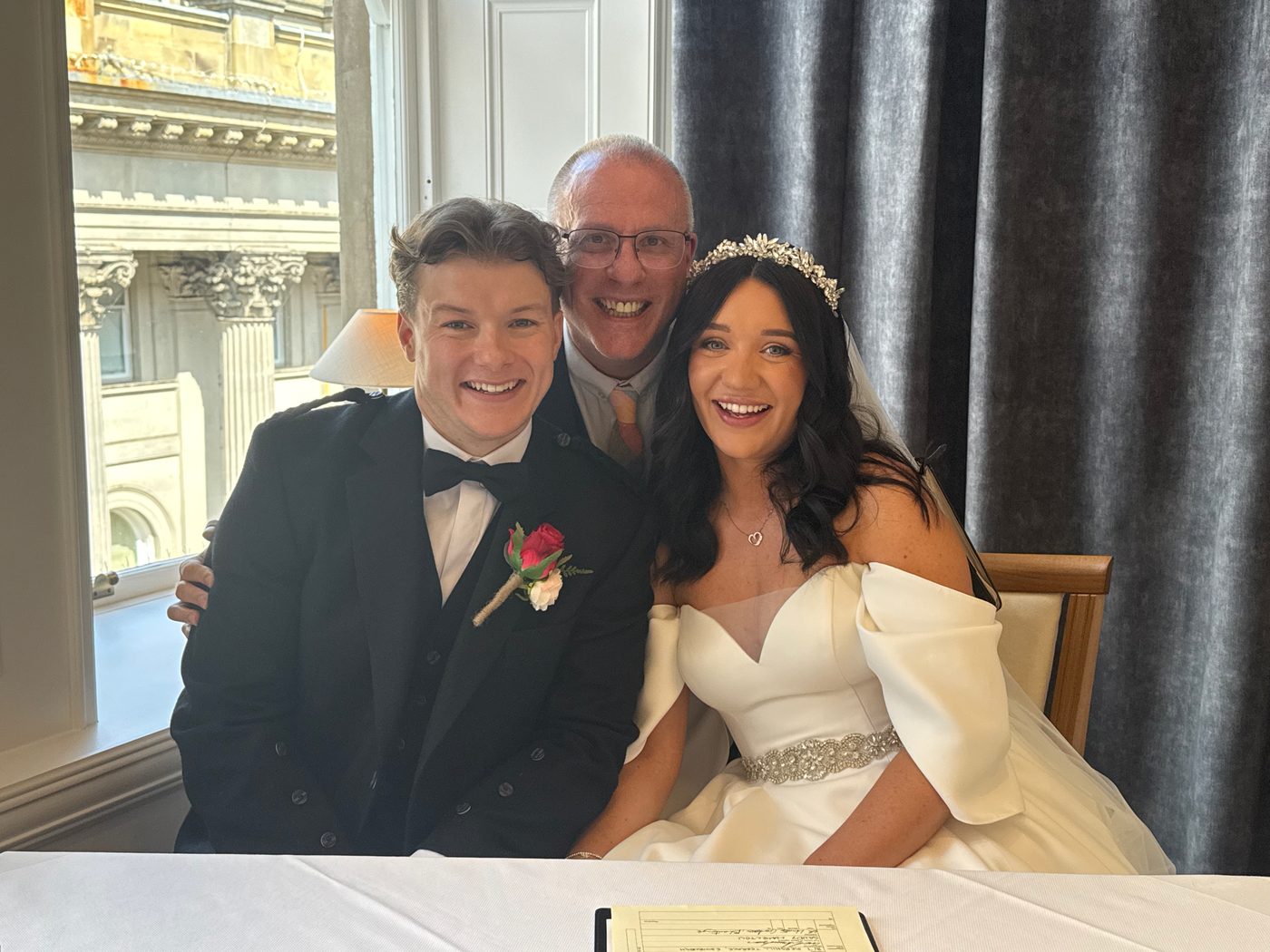
Most couples still default to the traditional afternoon ceremony because it's what they've always seen. But there's no rule that says your "I do" has to happen at 1pm. More and more of the couples I work with are choosing to marry at dusk, or later — and once you understand why, it's easy to see the appeal. Here's what an evening or twilight ceremony actually involves, practically as well as prettily.
Why couples choose to marry after dark
A few reasons come up again and again. Guests who can't take the day off work can still make an evening ceremony without missing a thing — useful if a good number of your people are travelling straight from the office or from further afield. There's the light itself: candles and fairy lights read as decoration in daylight, but at dusk they become the actual source of atmosphere in the room, and golden hour before the sun properly goes gives photographers something they can't manufacture at midday. Many couples also tell me it simply feels more intimate — a smaller pool of light, everyone gathered in close, none of the glare and squinting of a bright marquee. And there's a practical win too: if your reception is running into the evening anyway, a later ceremony removes that awkward stretch where guests are milling about waiting for the "main event" to start hours after they arrived.
Scotland's daylight swings hugely by season
This is the bit that catches people out if they don't plan for it. Scotland's daylight hours move dramatically across the year, far more than further south, so "evening" means something completely different depending on your wedding date. A ceremony at 8pm in late June can still be properly bright — genuine daylight lingering past 9.30pm in parts of the country, meaning your "twilight" slot might not deliver twilight at all unless you push later still. A December evening ceremony is a different proposition entirely: it's dark by mid-afternoon, so anything after about 4pm needs full lighting, and heating, planned in from the start rather than added as an afterthought. I always work backwards from the actual sunset time for your date and venue rather than from a nice round number on the invitation — it's the only way to get the mood you're picturing rather than a slightly disappointing half-light. If you're weighing up the season more broadly, I've written separately about the case for a winter wedding in Scotland, which covers a lot of the same light-and-timing territory.
Getting the lighting and venue logistics right
An evening ceremony lives or dies on lighting, so it's worth treating as a proper part of the planning rather than a last-minute styling detail. Candles look wonderful but are rarely enough on their own — most venues have fire regulations around open flame anyway, and a room lit only by candlelight can leave guests at the back squinting to see anything at all. The ceremonies that work best layer several sources: warm venue lighting or fairy lights as the base, candles for atmosphere on top, and enough general light that guests can actually read an order of service, see your faces clearly, and follow along without straining. Your photographer will also thank you for thinking about this early — low light is beautiful but unforgiving, and knowing where the light is coming from lets them plan rather than scramble. Talk to your venue early about what's actually possible: whether they can dim house lights rather than switch straight to full brightness, whether there's a walkway or aisle that needs its own lighting so nobody trips in the dark, and whether outdoor space needs heaters or blankets on hand once the sun's gone. None of this is complicated, but it does need deciding before the day rather than during it.
The legal timing is genuinely flexible
Here's the good news that makes all of this easy to arrange: a humanist ceremony through Humanist Society Scotland has no fixed "must happen before X o'clock" rule. Some countries tie legal marriage to registrar office hours or set cut-off times, which can force couples into an afternoon slot whether they want one or not. Scotland's system doesn't work that way — your ceremony can legally take place whenever suits you and your venue, day or night, without any registrar-imposed deadline to work around. That flexibility is one of the quieter advantages of choosing a humanist ceremony in the first place, and it's what makes an evening or twilight wedding genuinely straightforward to plan rather than something you have to fight the system for. It's worth folding into your wider budgeting conversation too, alongside things like venue hire hours — I've gone through the numbers in more detail in my piece on what a humanist wedding costs in Scotland, including how timing can affect what you pay for a venue.
The short version
An evening ceremony isn't just a nicer-looking photo album — it's a real, practical option with its own logistics to get right: know your season, plan your light in layers, talk to your venue early, and lean on the fact that a humanist ceremony gives you total freedom over when you say your vows. Get those pieces in place and dusk becomes one of the most atmospheric times of day to marry.
Thinking about an evening or twilight ceremony? Tell me your date and venue and I'll work out the light, the timing and what's realistic before you commit to anything.
Check my date