
Naming ceremony vs christening: what's the difference?
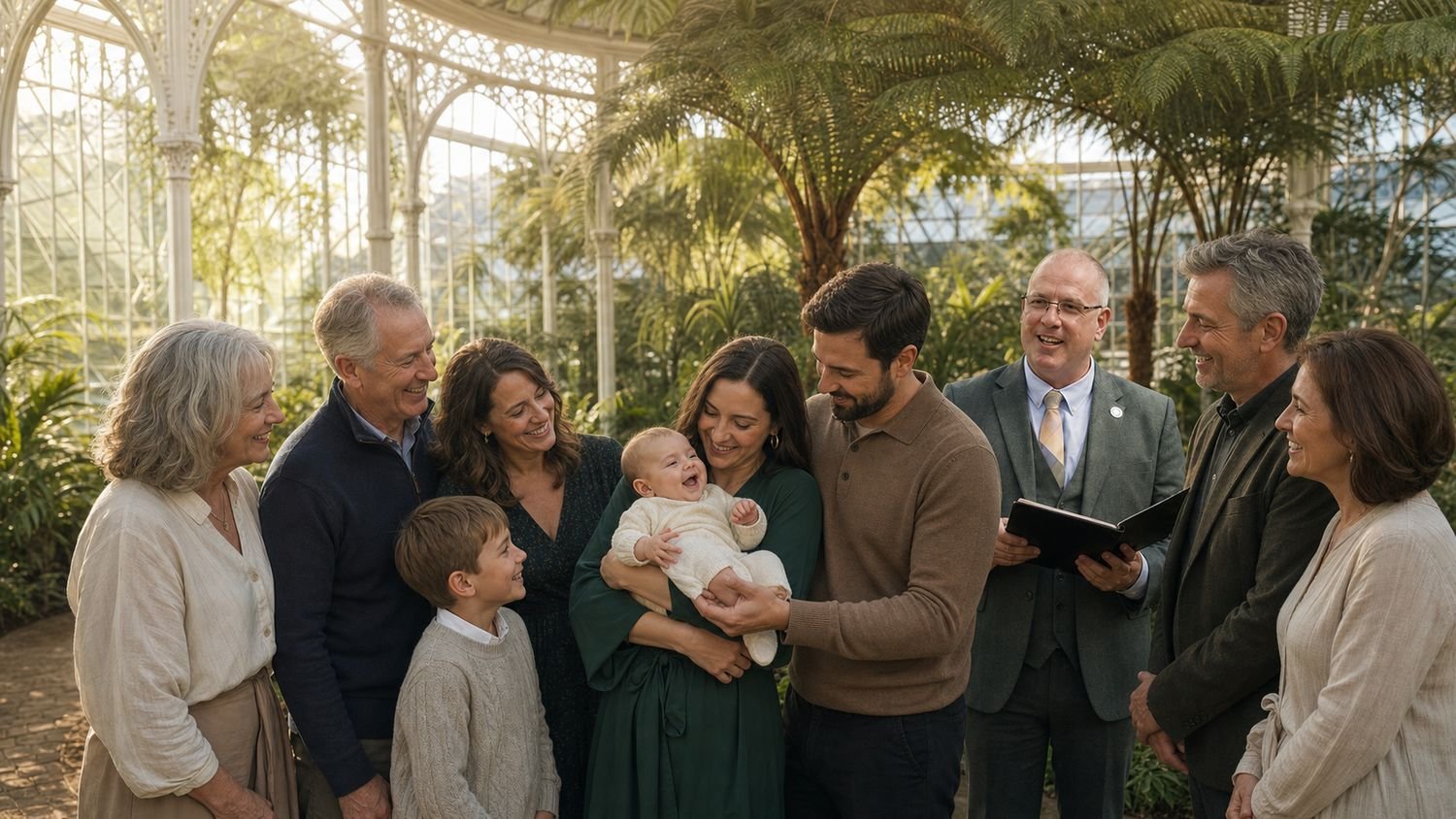
Families ask me this constantly, usually while working out what on earth to call the day they're planning. Both formally welcome a child into a family and a community. Both are a proper occasion with everyone dressed up and a party after. The difference is entirely in the framework around it — one is religious, one isn't, and that changes more than you'd expect.
Religious content
A christening is a Christian rite: baptism with holy water, promises made to raise the child within the church, and a service led according to that church's own liturgy. A humanist naming ceremony has none of that — no baptism, no religious promises, no liturgy. It's built entirely around your family's own story and values, whatever those are. If you're not religious, or you're a mixed-faith family who can't agree on one tradition, or you simply want the day to reflect what you actually believe rather than what's expected, that's exactly the gap a naming ceremony fills.
Godparents, or guide parents
A christening comes with godparents — a religious role, chosen partly for their faith, who make promises on the child's spiritual behalf. A naming ceremony has guide parents instead: the aunties, uncles, best pals or cousins your family has chosen to have a real, lifelong role in your child's life, who make their own commitment during the ceremony. Same warmth, same sense of a wider circle stepping up — just without the religious requirement attached to who can stand there.
Where and when
Christenings typically happen in a church, often within a window that church's own custom expects. A naming ceremony can happen anywhere in Scotland, on your own timeline — your living room, a favourite beer garden, a venue you love, whenever suits your family rather than a religious calendar. It has no legal status either way, so there's no paperwork or notice period holding you to a date.
The honest bottom line
Neither is "better" — they're built for different families. If your family is religious and the church matters to you, a christening is exactly right. If it doesn't reflect what you actually believe, a naming ceremony gives your child the same formal, joyful welcome, written entirely around your own story instead of someone else's requirements. More on how a naming ceremony works, or for ideas on rituals and readings, my guide to naming ceremony ideas.
Thinking about a naming ceremony? No hard sell — just tell me about your family and I'll come back with a straightforward quote.
Get in touch