
He proposed with a drone he had programmed himself.
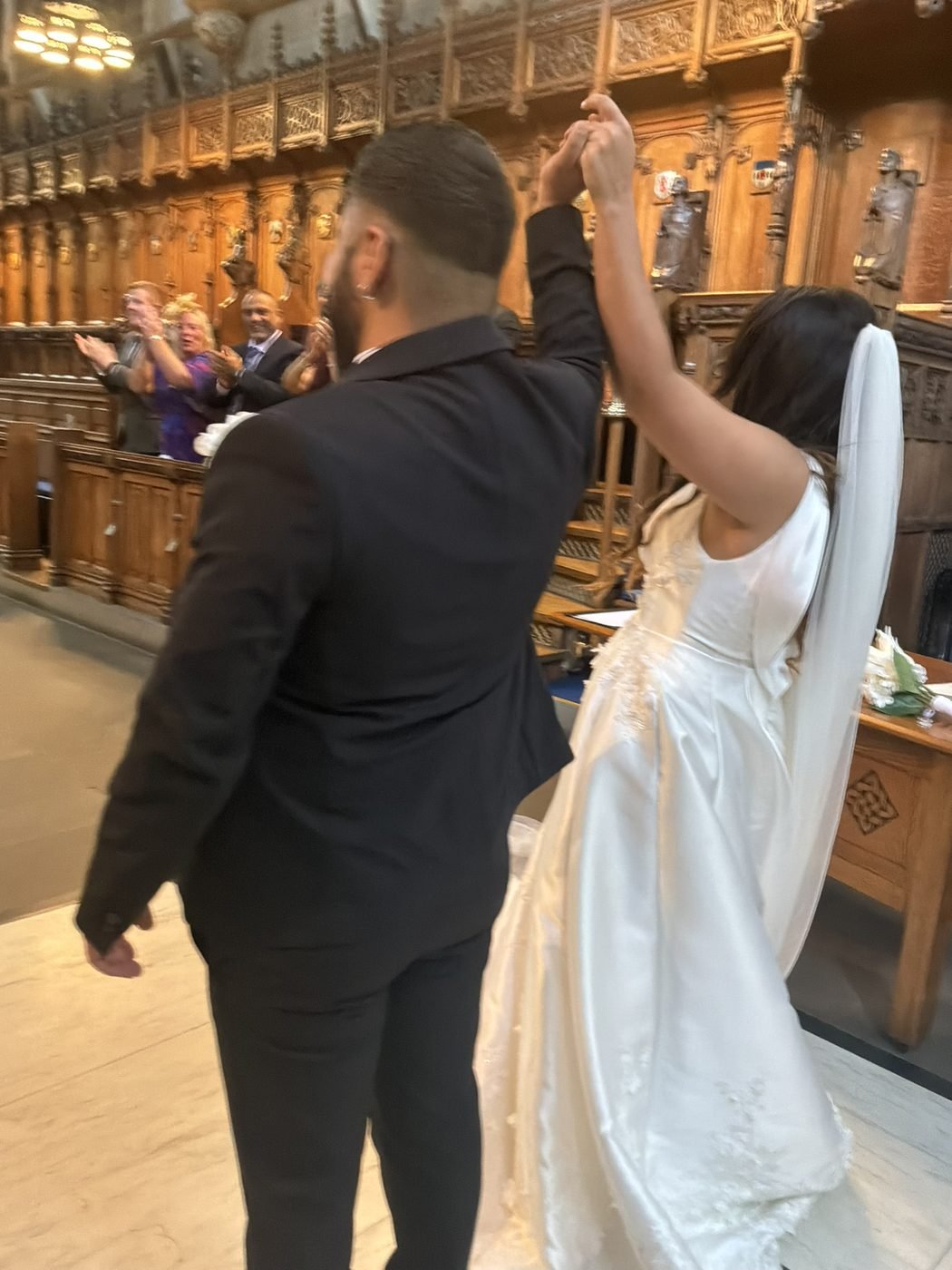
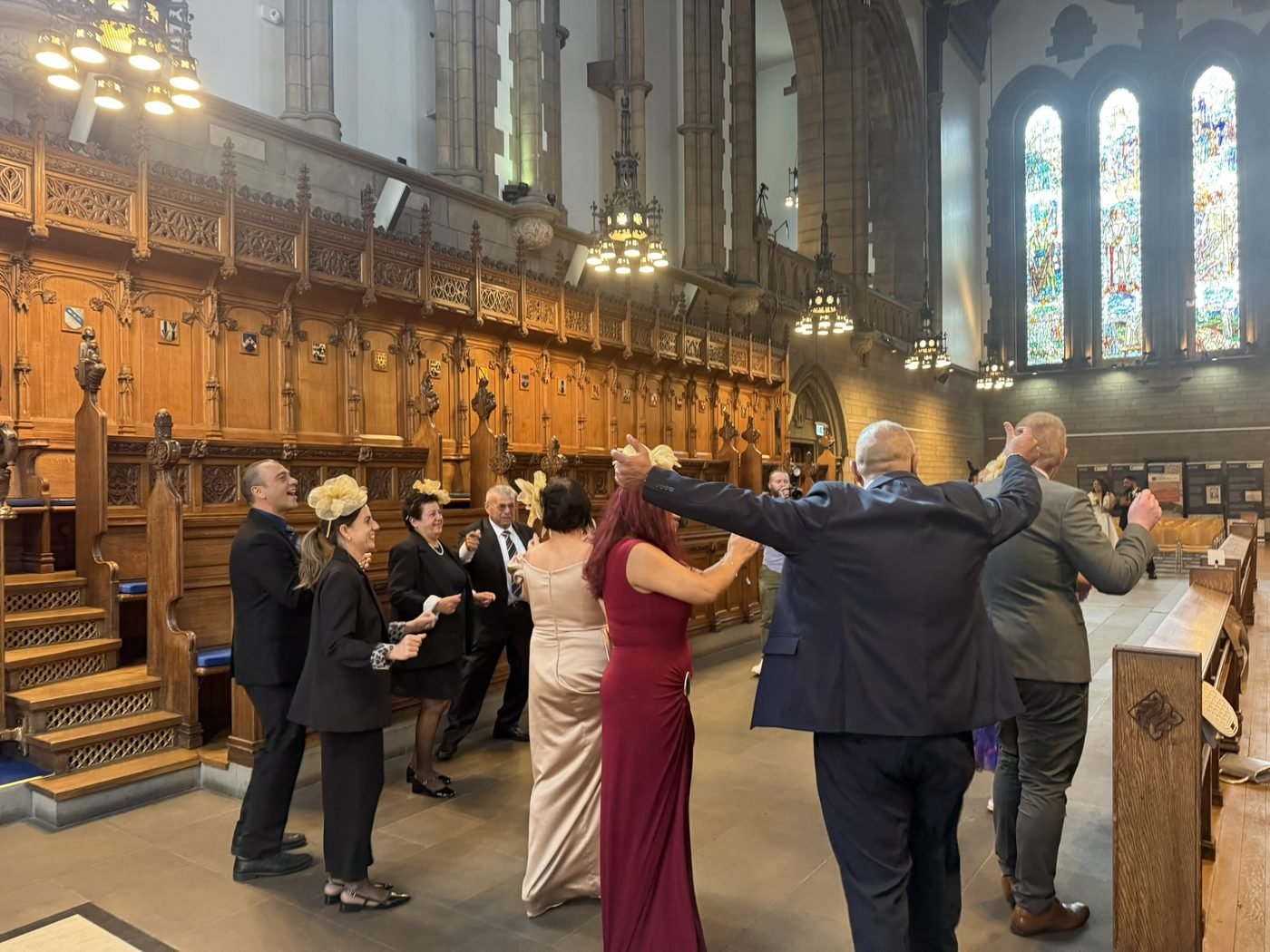
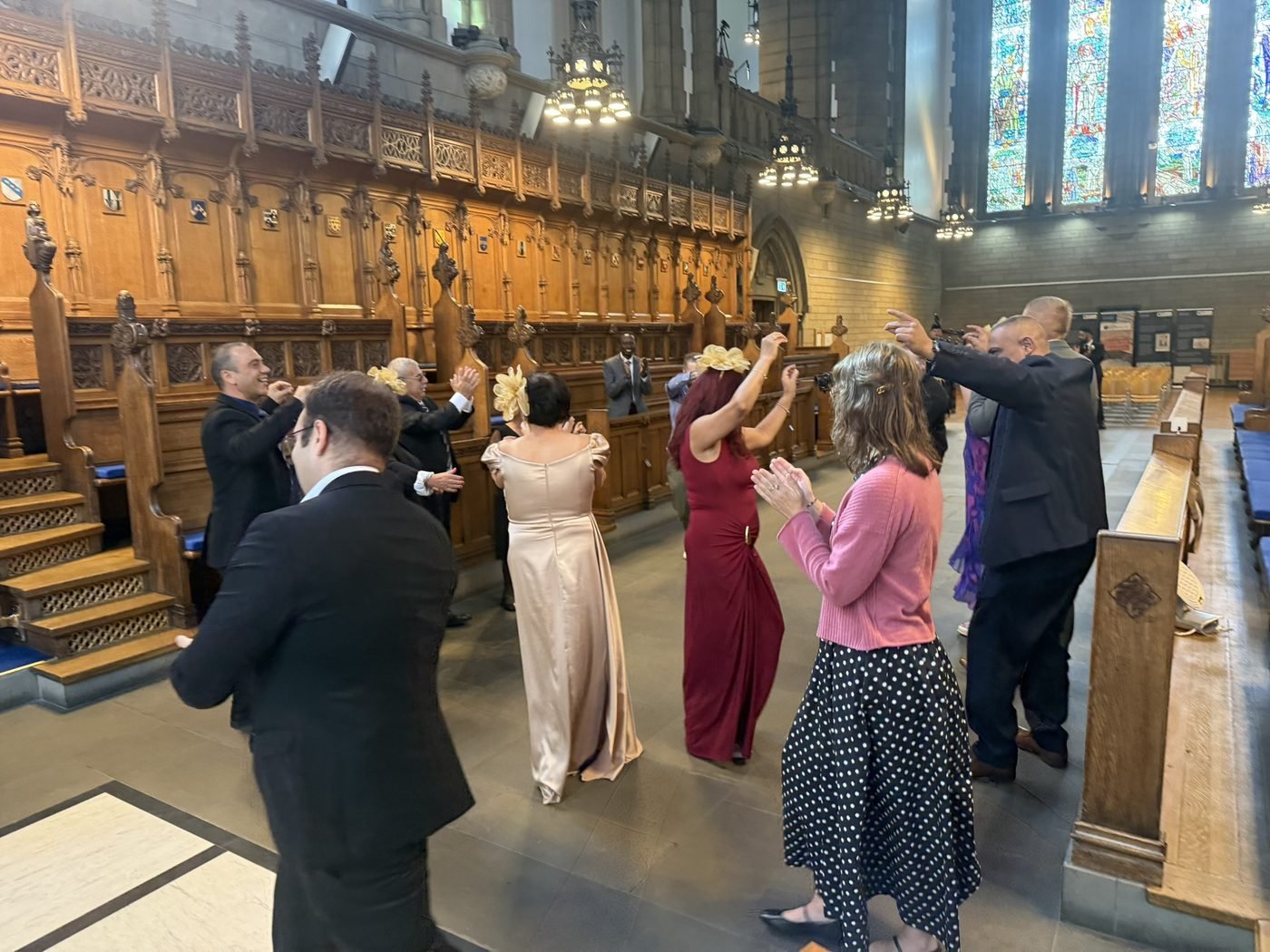
Burak and Duygu were married on a Friday afternoon in September in the University of Glasgow Memorial Chapel, with a piper on the steps and the light coming through Douglas Strachan's windows. Two people who sat in the same classroom in Cyprus for years and took until 2017 to work out what everybody around them had already decided. There was a Turkish welcome, a ring warming that went round every person in the room, and dancing in the chapel before anyone had left the building.
Their story
This one does not start in Glasgow. It starts in a classroom in Cyprus. Burak and Duygu were at the same secondary school, then the same high school, and for most of it the same class. Same room, same teachers, same timetable, year after year. Then they both went to the same university to study different subjects and carried on turning up in the same place at the same time.
For years they were pals. Good pals, and nothing else. They went to the high school graduation ball together, as friends, and the reason neither of them had been asked by anybody else is that the whole class had quietly agreed not to ask them, because the whole class was trying to set them up. When there was a school picnic to organise it was the two of them organising it and running the barbecue, working like a team without anyone suggesting they should. At New Year, when the class drew names for presents, their friends swapped the slips so that Burak got Duygu and Duygu got Burak. Years later, comparing notes, they found they had each kept every present the other had ever given them.
Then 2017. Duygu signed up for a programming course, Burak was studying computer engineering at the same university, so they studied together. Then lunch. Then coffee. Then going out. And that was the whole thing. Ask either of them what actually happened and they cannot tell you. There was no moment, no conversation, no night where somebody finally said it. What they worked out later is that they had already done the work. All those years of trusting each other more than anybody else was them getting to know each other. By 2017 they were simply ready. Not one person was surprised. It had been obvious to the whole of Cyprus, and obvious to everybody except the two of them.
Most couples, newly together, work up to something big slowly. A holiday. A joint Netflix account if things are going well. These two gave it two years and emigrated. In 2019 they left the island they had lived on their whole lives and came to Glasgow. Duygu started an MSc at Strathclyde, Burak started a PhD at Glasgow, and then Duygu went off and did her doctorate at Edinburgh. So picture it: a flat in Kilsyth, one of them heading east every morning and one heading west, two doctorates running at once in two different cities, in a country they had been in for about five minutes. Then five months after they arrived, the world shut. The flight home in April 2020 was cancelled, and when a seat came up on a charter flight they turned it down and did the whole thing online, because they had come here to do a job.
Both of them got there. Duygu is a statistician working in genetics, and her doctorate looked at which animals are less likely to catch and pass on disease so that we can breed for it, which is to say she has spent years on the maths that stops the next outbreak. Burak lectures at the University of Glasgow in computer networking, wireless communications, AI and robotics. He builds robots. Actual, working robots. Looking the pair of them up before we met made my own profile read like a parish newsletter.
The proposal, and a systems test
These two put a bit of themselves into everything, so Burak was never going to just ask. It was not a surprise that it was coming: they had chosen the engagement ring and both wedding bands together, so Duygu knew fine well. What she did not know was how.
He drove her out to Carron Valley, up by the water with the hills all round, and he brought a drone. He had written the programme himself and loaded it before they left. The drone lifted off on its own, took itself out over the loch, filming, then turned and came slowly back in towards the two of them. At exactly the right moment, in exactly the right place, because he had coded it that way, Burak got down on one knee. Duygu said yes, and cried a bit, and every second of it is on film, because of course it is. That is the only proposal I have ever been told about that involved a successful systems test.
Marrying had been sitting with them for two or three years. It was never whether, it was when, and the when kept moving. Finish the PhD first. Get the job first. Get settled first. There was always one more sensible thing to sort before they got round to themselves. Then this summer they stopped, because the list never ends and at some point you have to stop putting yourselves at the back of your own queue.
Which is how I ended up working through the paperwork in July with the precision you would expect from two doctors. When I got to the bit where Scots law wants the marriage schedule signed in indelible ink with a fountain pen, Burak had a solution ready. He offered to build a robot to sign it. I had to tell him the law insists on a human. He seemed to think that was an oversight.
The ceremony
A piper played Duygu in with her mum. I opened in Turkish, in Burak's own wording, which I had practised more than I am prepared to admit and which the room was generous about. Then we named people: the grandparents and the professor who was not family by blood but was family in every way that counts, and the brothers, grandparents and cousins back home who could not make the journey. There is a celebration coming in Cyprus, and I am reliably informed that nobody is getting out of it.
Then a ring warming, which is my favourite thing to do in a room that size. The wedding rings started at the front and went hand to hand through every single person in the chapel. You hold them for a second, make a wish or a promise or just think something kind, and pass them on. By the time they came back to me they had been held by everybody there, so when Burak and Duygu put them on each other's hands they were wearing the good wishes of every person who loves them. Two rules, and I gave them both: keep them moving, because I need them back before the vows, and these are not wedding favours, you do not get to keep them.
They describe themselves as a puzzle that happens to fit. Duygu loves to cook and Burak loves to eat, which sorts itself out. Duygu worries and Burak talks her down. Burak wants to move now and fix it now, and Duygu makes him think about it twice, and she is usually right. Nine years, two countries, two doctorates, and nobody outside that flat has ever seen daylight between them. Ask what they want next and the answer is one word: peace. The people they love well, hope for tomorrow, time together, and good memories built out of ordinary days.
For nine years the next thing on their list has always been a deadline. A submission, a viva, a move, an application. As of that afternoon, it isn't. It's each other. And then, in a nineteen-twenties memorial chapel in the west end of Glasgow, everybody got up and danced before they had even left the building, which is not something the room sees every week and was all the better for it.
Marrying at Glasgow University Chapel yourself?
First, the thing most couples do not know: you can have a humanist ceremony here. The Memorial Chapel is one of a small number of places in Scotland where Protestant, Catholic, secular and humanist weddings all happen under the same roof, and a humanist wedding in Scotland is every bit as legally binding as any of them.
Second, check your eligibility early. The chapel has traditionally been for graduates, students and staff of the university and their sons and daughters, and couples with no connection are now invited in certain months of the year. Get that conversation done before you fall in love with the room, because you will fall in love with the room.
Third, it is big. It seats a few hundred, which means a wedding of eighty can feel lost in it if you let it. Ask to have your guests seated forward and close, use the front of the chapel rather than spreading down it, and pick something participatory: a ring warming is perfect in a room this size, because it physically connects everybody to what is happening at the front. And get a piper for the steps. The approach up University Avenue deserves one.
There is more on the room and how the day runs in my Glasgow University Chapel venue guide, and if you are marrying round here my West End of Glasgow page and Glasgow wedding celebrant page are the place to start. I live in Kelvinbridge, ten minutes down the hill, so couples booking me for Glasgow weddings pay no travel fees. If the ring warming appealed there is a full guide to ring warming ceremonies, and if you are marrying across cultures or languages I have written about interfaith and multicultural humanist weddings in Scotland too.
Somewhere in Cyprus there is a class of people who spent years refusing to ask either of these two to a dance, on the grounds that they were obviously meant for each other. Congratulations, you pair. Everybody was right.
Ceremony at the University of Glasgow Memorial Chapel, University Avenue, Glasgow.